
Reading books usually precedes writing. The love of reading is the fuel that ignites readers to become writers. Losing yourself in a book can be addictive. And long after you become a writer, continuing to read books that others write is essential. However, reading for pleasure can become an irresistible magnet taking you away from your own writing.
There is no doubt that reading books written by favourite authors inspires and fuels one’s own writing project.The act of reading is not only pleasurable, it exposes them to grammar, punctuation, syntax, and flow, which supports their understanding of the technical aspect of writing. It helps them pick out interesting words in context. Taking note of the way a text is written in terms of its structure teaches emerging writers how to build plots, find balance between dialogue and description, pace scenes, and create tension. Fresh ideas are generated by reading genres you normally wouldn’t bother about.
Learn from literary giants
Writing fiction is one of the major investigations of culture and people, and reading develops the writer’s awareness. In my opinion, studying literature, which is also a study of how to read, is essential for the emerging writer. There are immeasurable benefits for writers to read books, poetry and plays written by literary giants.
Personally, at university, I was surprised at how much I learned about writing fiction and developing narrative ideas from reading the plays written by English playwright and poet, William Shakespeare (1564-1616)—how much a character needs to reveal, and when; how much one scene can handle; how to build tension and intrigue; how to gradually build a fully fleshed, complex character; how to interweave sub-plots, and recognise how well-thought-out threads build a rich tapestry.
I also have great respect for Geoffrey Chaucer’s ability to create interesting characters.
Write, Read, Rewrite … Repeat
Virginia Woolf (25 January 1882–28 March 1941) wrote: ‘Sometimes I think heaven must be one continuous unexhausted reading.’ I am sure she is referring to reading for pleasure and rereading her writing—on repeat. She also wrote: ‘At each fresh reading one notices some change in them, as if the sap of life ran in their leaves, and with skies and plants they had the power to alter their shape and colour from season to season.’ (Genius and Ink: Virginia Woolf on How to Read)
Writers often describe the process of writing, and constantly re-reading and rewriting, as painful— but it is a form of growth. The writer and the text are in constant negotiation.
It’s important to keep in mind when writing and editing, that engaging prose isn’t just a matter of arranging words and sentences as they come to mind. Yes, initially this is part of the process of jotting down ideas during the early stages of writing. But eventually, through the process of many self-critical readings and edits, the combined creative effect of crafting prose that consolidates ideas, and simultaneously engages the reader, will emerge.
Writing that stands the test of time involves many drafts, rereading and edits. Make sure your publishable writing is the best it can be to avoid the slings and arrows of global readers.
Highly readable prose is the product of a strong sense of connection within and between sentences, and the choice of the right (not necessarily the most complex) words that match the context. Here are three short and simple connecting sentences that are highly readable (from Margaret Atwood’s ‘Cat’s Eye’):
The air is soft, autumnal, the sun shines. I am standing still. And yet I walk head down, into the unmoving wind.
The reader steps into the character’s shoes and not only feels the warmth of the sun, but also senses her state of mind. Short sentences with simple words force the reader to engage, or ‘read’ between the lines and spaces.
Reading with a critical eye
So many writers force-feed their readers with too much boastful language, description and wordiness. As I have written in an earlier article, short sentences combined with longer sentences create a rhythm and keep the reader engaged. Getting the balance and tone right usually involves many readings and reworkings.
It takes time, objectivity and patience to read one’s own writing with a critical eye.
Be rigorous every time you reread your writing
Be constantly alert to redundant words
Know when to use one word and not another that has a similar meaning (fewer/less)
Be judgemental of every sentence construction
Get rid of clumsy clichés and metaphors
Make sure you’ve simplified complex ideas
An editor, or manuscript assessor, is often the first critical reader (other than peers, friends and family) to read your writing project. They will point out problems before the work is sent out for scrutiny into the super-critical world of publishers, readers and reviewers.
Read widely
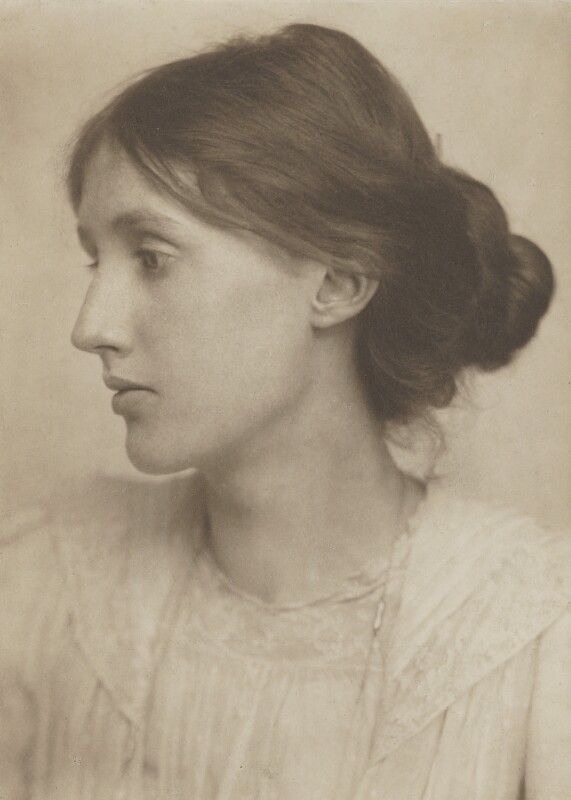 If you are passionate about writing stories about the way we live, keep reading books, not only those written by your favourite authors but also books that stretch you because you may not have read that genre before. In my work as an editor and assessor of many genres I read as widely as I can. I am always inspired by Virginia Woolf’s passion for reading.
For we are apt to forget, reading, as we tend to do, only the masterpieces of a bygone age, how great a power the body of literature possesses to impose itself; how it will not suffer itself to be read passively, but takes us and reads us; flouts our preconceptions; questions principles which we had got into the habit of taking for granted, and, in fact, splits us into two parts as we read, making us, even as we enjoy, yield our ground or stick to our guns.
Virginia Woolf, ‘Notes on an Elizabethan Play’ (1925)
Are you seeking an editor?
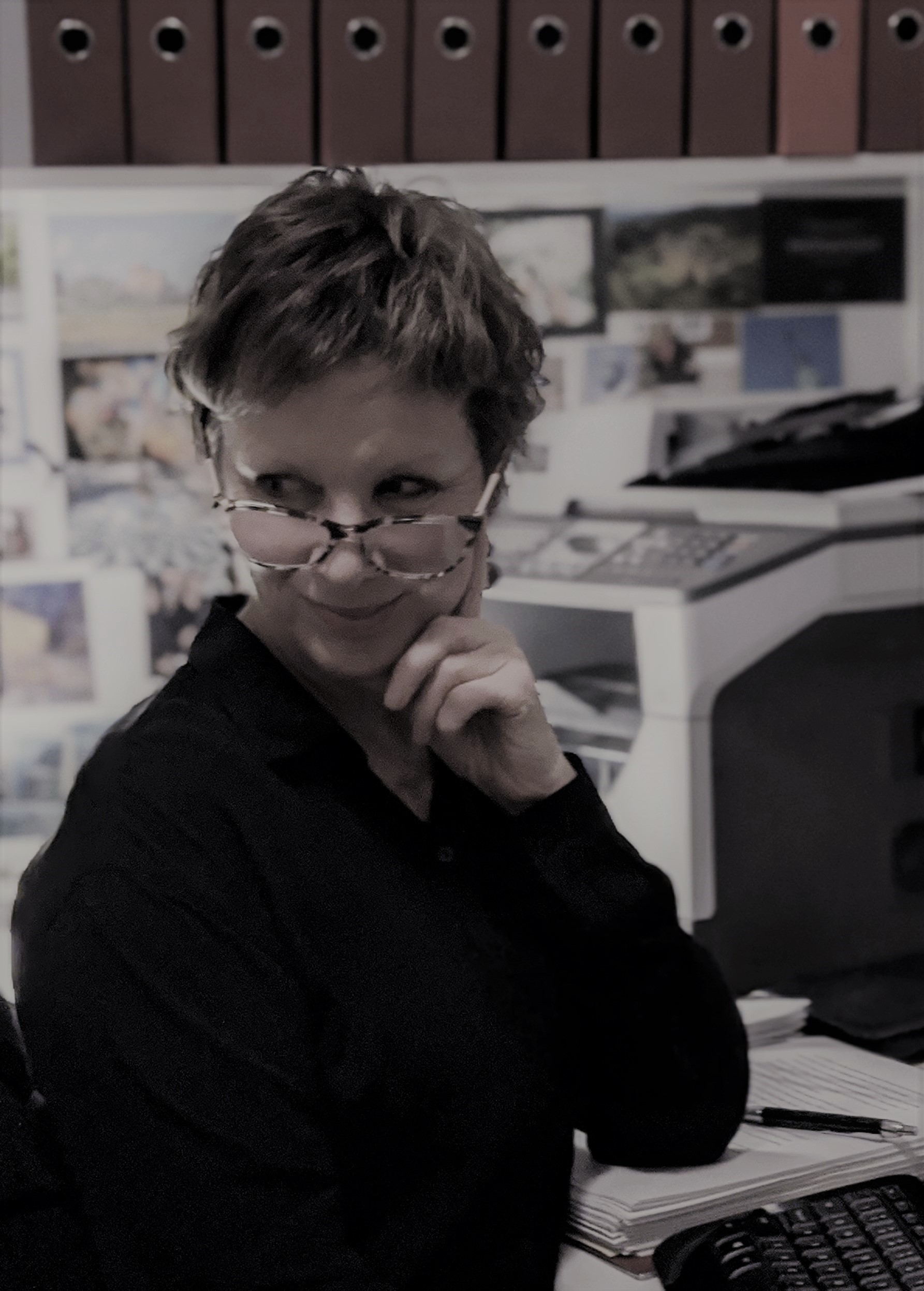 Are you ready to have your writing edited, whether it only needs a light edit or a more detailed structural edit? Or if you would like an assessment of your unpublished manuscript?
Then please email me via my contact page or directly at denise@denisemtaylor.com.au with a brief overview of your specific needs and the word count of your manuscript.
My editing is based on the Australian Style Manual (ASM) unless an author has been commissioned to write a book using the publishing house style guide.
I hope I ‘hear’ from you soon!
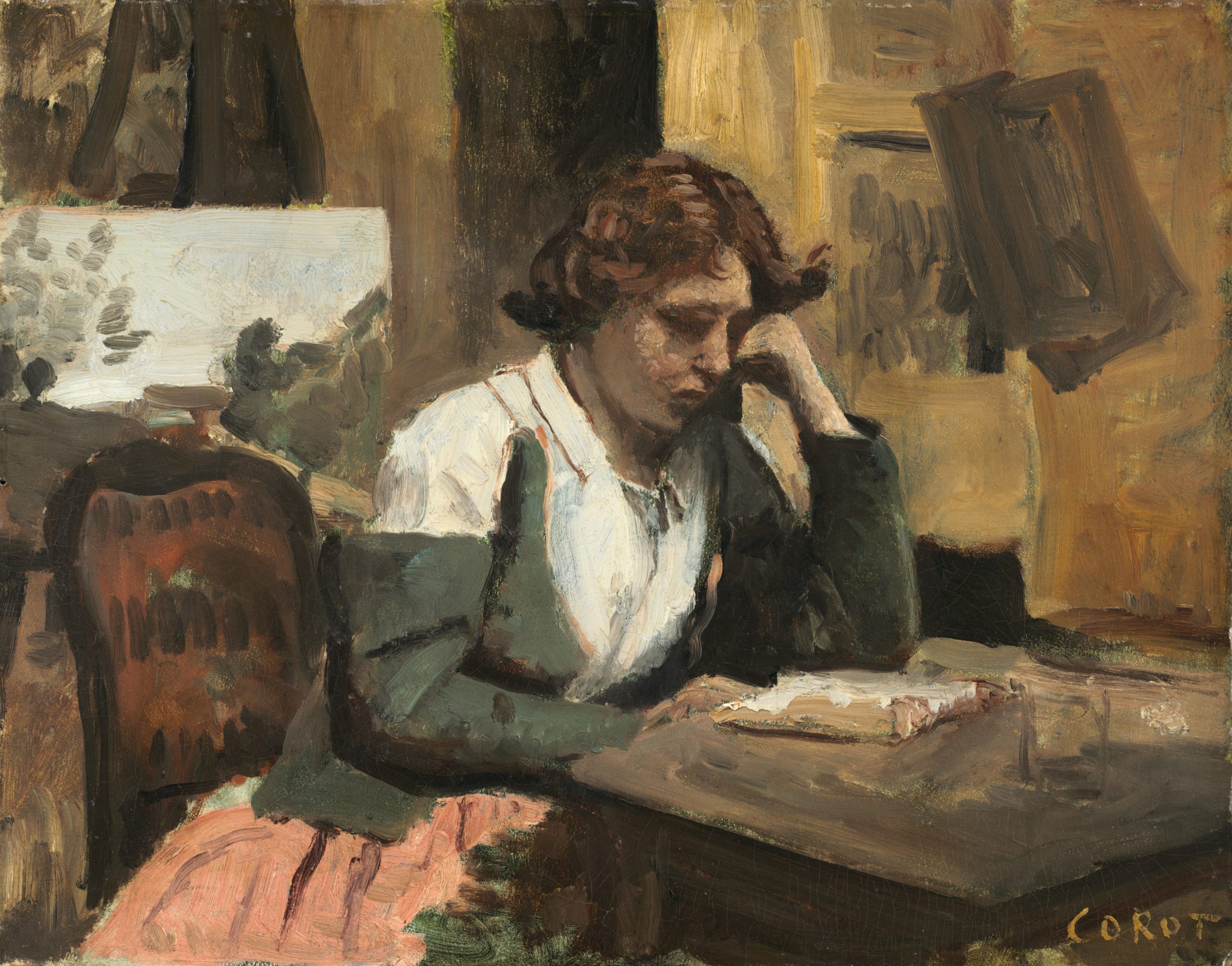
Featured image; Young Girl Reading by Jean-Baptiste-Camille Corot, c1868, National Gallery of Art, Washington, D.C.