Verbs are the engine of sentences but they are often not used to provide maximum impact. When editing or reviewing, I often ask writers of both fiction and non-fiction: ‘Do you think critically about your choice of every verb and the way it’s used in every sentence?’ The majority of answers are something like: ‘sometimes’ or ‘I don’t give them […]

A fictional character doesn’t have to be a human or an animal—a dark foreboding forest with a tangle of undergrowth can act as an antagonist, or a force of nature, such as a cyclone that bears down on a town, or an insidious pandemic. On the other hand, there may be a place where a character can go to that […]
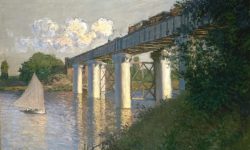
Words are powerful and can ‘paint’ a picture, particularly words used in poetry that resonate and stay with us. Favourite passages in novels are often read and reread to relive that feeling and scene, or that memory of the first time they were read. Visual art stimulates an immediate sensation through sight and is not tied to language. A work […]

I read a lot of historical fiction and I have my favourite authors of the genre: Peter Carey, Geraldine Brooks, Tracy Chevalier, Barbara Kingsolver, Hilary Mantel, Kate Grenville and Markus Zusak. I have also been blown away by so many emerging historical fiction authors whose unpublished novels are sent to me for assessments. I love being able to immerse myself […]
Do you have an unpublished novel or a non-fiction manuscript ready for submission to publishers or agents, or maybe you’re considering self-publishing? Before you take the plunge and hold your breath, hoping for success, it is prudent to submit your manuscript for a professional objective critique. So why not take advantage of my fee-reduction offer for the month of September […]
Superfluous words are the enemy of good writing. I often come across writing that includes adjectives and adverbs that are either wrongly chosen to ‘qualify’ another word or are lazy choices (written without thinking whether they are necessary or appropriate). One of the best ways to avoid these inconsequential (lazy) qualifiers is to read back every sentence you write and […]

Choosing the intimate first-person point of view to write a scholarly book or a fictional narrative is challenging. Point of view (POV) is the perspective from which an author writes a story or presents information. There are three points of view (viewpoints) — the first-person POV (I, we), the second person (you, your), and the third person (he, she, they). […]
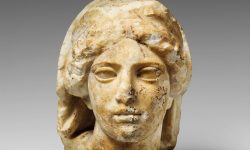
Recently, I taught an adult class about classical art and spent time, with my editor’s hat on, explaining the difference between the words ‘classic’ and ‘classical’, and whether to capitalise these words in a sentence. Both words imply that something is of a special class, and refer to high culture, especially the civilisations of ancient Greece and Rome (hence the […]

Whenever I’m reading a novel or editing an unpublished manuscript with heaps of dense descriptive text, it’s always a welcome relief to turn a page and see more white than black, which is usually in the form of dialogue. More importantly, successful dialogue excites most readers because it not only advances the story and fleshes out the characters, but enlivens the […]
Although ‘principle’ and ‘principal’ sound the same, as do ‘past’ and ‘passed’, they are often used incorrectly in a sentence. These two pairs of words are called homophones — two or more words that sound the same (identical pronunciation), but have different meanings and sometimes different spellings. The term homophone comes from Greek ‘homo-’ (same) and ‘-phone’ (sound), so the […]