Posted by Denise on Aug - 29 - 2025 - Comments Off on Is it who or whom/that or which/lie or lay?
In my role as editor, I am still correcting the misuse of lie/lay; that/which; and who/whom. I understand that most readers won’t pick up the errors. However, if you’re aiming to impress a potential publisher, or you’re writing an academic paper, learning how to correctly use these words is important. So, I’ve resurrected three articles that I wrote 10+ years […]
Verbs are the engine of sentences but they are often not used to provide maximum impact. When editing or reviewing, I often ask writers of both fiction and non-fiction: ‘Do you think critically about your choice of every verb and the way it’s used in every sentence?’ The majority of answers are something like: ‘sometimes’ or ‘I don’t give them […]
A fictional character doesn’t have to be a human or an animal—a dark foreboding forest with a tangle of undergrowth can act as an antagonist, or a force of nature, such as a cyclone that bears down on a town, or an insidious pandemic. On the other hand, there may be a place where a character can go to that […]

Words are powerful and can ‘paint’ a picture, particularly words used in poetry that resonate and stay with us. Favourite passages in novels are often read and reread to relive that feeling and scene, or that memory of the first time they were read. Visual art stimulates an immediate sensation through sight and is not tied to language. A work […]

I read a lot of historical fiction and I have my favourite authors of the genre: Peter Carey, Geraldine Brooks, Tracy Chevalier, Barbara Kingsolver, Hilary Mantel, Kate Grenville and Markus Zusak. I have also been blown away by so many emerging historical fiction authors whose unpublished novels are sent to me for assessments. I love being able to immerse myself […]

Superfluous words are the enemy of good writing. I often come across writing that includes adjectives and adverbs that are either wrongly chosen to ‘qualify’ another word or are lazy choices (written without thinking whether they are necessary or appropriate). One of the best ways to avoid these inconsequential (lazy) qualifiers is to read back every sentence you write and […]
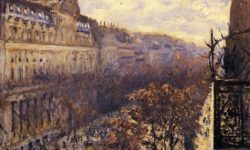
Through the swift application of paint, the French Impressionist artists aimed to capture the atmosphere of a place at a specific time of day. When I read the first few paragraphs of a novel, or an unpublished manuscript set in a fictional place that is sent to me for assessment, I want to be captivated by a sense of place. […]

Choosing the intimate first-person point of view to write a scholarly book or a fictional narrative is challenging. Point of view (POV) is the perspective from which an author writes a story or presents information. There are three points of view (viewpoints) — the first-person POV (I, we), the second person (you, your), and the third person (he, she, they). […]
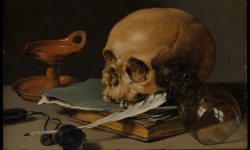
Whether you’re writing a crime narrative, Young Adult novel or an academic textbook, the ultimate aim is to create sentences that flow effortlessly so your reader is constantly engaged with the content/narrative. This memento mori still life painting by the seventeenth-century Dutch artist Pieter Claesz is a potent reminder that life is short, but our finest work/s will endure. So, […]

To hyphenate or not to hyphenate? That is the question . . . Joining words with hyphens is becoming less frequent as many are now being fused as they become more well known, such as proofreader and girlfriend. However, when two words together modify another word, they are often hyphenated. For example, in the phrase ‘large-scale installation’, the words ‘large’ […]