‘Lock up your libraries if you like; but there is no gate, no lock, no bolt that you can set upon the freedom of my mind.’ Virginia Woolf’s famous essay ‘A room of one’s own’ (published 90 years ago, in 1929) is a rallying cry for women’s intellectual and social freedom – a feminist tract that calls attention to the missing voices of […]
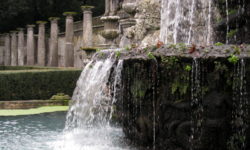
Choosing and arranging words according to their sound can intensify meaning and create rhythm in a sentence; the degree of musicality you employ will depend on the intended mood and tone of your writing. In Geraldine Brooks’ ‘Year of Wonders’ (2001), Part 1 is called ‘Leaf-Fall, 1666’. Readers’ senses are immediately stimulated as autumnal sights, sounds and smells are richly […]
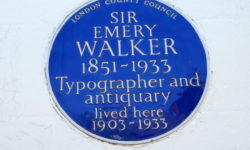
The handmade book and the manual craft of printing are brought into sharp focus in an Arts and Crafts house situated along a short stretch of the Thames River in Hammersmith, just a half-hour train journey from central London. I visited 7 Hammersmith Terrace on a sunny spring day on the 17th of May this year. Between 1903 and 1933, […]
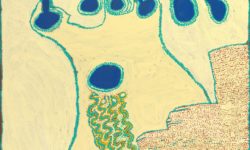
Travel writing often ends up being fantasy. The idea of the writer-artist as an independent traveller embodies a romantic notion that the source of his or her inspiration is an unrestrained inner life. English travel writer, Bruce Chatwin (1940-89,) was a post-Vietnam-War traveller, content to travel alone and live in ‘native’ standards of comfort. His writing style is as intoxicatingly […]

The famous literary Brontë family lived in Haworth Parsonage, Yorkshire, between 1820 and 1861. Their austere grey-stone home, surrounded by dark-green trees, prickly hedges and bleak moors, is infused with gothic imaginations. Even though it is now the Brontë Parsonage Museum, and nothing can be touched, this is a place where astonishing art was created by three sisters. I imagine […]
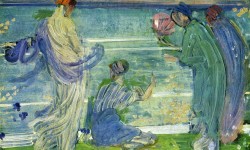
These days, it is cool to poo-poo the pursuit of beauty in art, but avant-garde writers and artists in late-nineteenth-century Europe, particularly in the hedonistic capital of France, celebrated the power of beauty to transform the beholder. English literary genius, Oscar Wilde, was notorious as the witty spokesman of Aestheticism and its bold declaration that art should be independent from […]

It takes courage for writers to ‘go out on a limb’ in order to develop, and commit to, an individual writing style that satisfies readers. On 9 March 1895, H. G. Wells, English writer and commentator, wrote a review in the ‘Saturday Review’ of Grant Allen’s controversial novel, ‘The Woman Who Did’: “The whole book … is strenuous without strength, […]
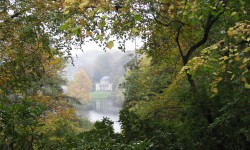
A sense of timelessness pervades the circuit walk at Stourhead garden in Wiltshire, England. This is a sublime place of beauty where nature has become art, ordered and arranged by humans. The last time I experienced this eighteenth-century landscape garden was on 28 October 2012 when rain tumbled softly, unhurried in the calm weather. Autumn colours were heightened by the […]
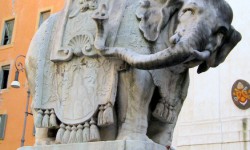
Written in his passionate and robust style, Lord Byron described the majesty of Rome’s Pantheon (“pride of Rome!”) in his lengthy narrative poem, ‘Childe Harold’s Pilgrimage’ (1812-1818): Simple, erect, severe, austere, sublime— Shrine of all saints and temple of all gods, From Jove to Jesus—spared and blest by time; Looking tranquility, while falls or nods Arch, empire, each thing round […]
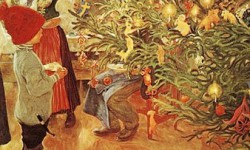
For most of us, Christmas takes us back to our childhood: Christmas stories, dressing up as Mary or Joseph or the shepherds (with a tea-towel head covering) in the kinder nativity pageant, family gatherings indulging in traditional Christmas food, leaving out milk and cookies for Santa Claus, the Christmas tree and Christmas carols. Since the 1970s and the Vietnam War, […]