
Proofreading is a quality control exercise with a fresh pair of eyes to spot mistakes in the writing that were overlooked in the copyediting process. So, the proofreader has a huge responsibility because errors are fewer and this requires increased concentration. In many ways, proofreading is the last line of defence to ensure the writing satisfies expected standards yet maintains the author’s style.
What does the proofreader do?
This is the last chance to spot:
—spelling mistakes including place and organisation names
—bad grammar
—incorrect punctuation
—inconsistencies in spacing, formatting and heading sizes
What does the proofreader need?
—a keen eye for ambiguity, repetition, typos and inaccuracies.
—spelling proficiency and preferably two sets of dictionaries (I refer to the Oxford English Dictionary and the Macquarie Dictionary).
—a better-than-basic grasp of grammar such as keeping track of tenses and recognising the subjunctive mood even if the author cannot (For example, I suggest that he find a new hobby – not, finds a new hobby).
—a sound knowledge of punctuation, especially when writing dialogue.
—the ability to concentrate for long periods of time – focus on every word on every line.
—a place to proofread undisturbed.
—an understanding of the spelling differences between US English and UK/AU English.
Challenges facing the proofreader
Respecting the ‘voice’ of the author
For example, the memoir of a cricketer will have a less formal, more chatty tone, probably with humorous anecdotes, whereas a book written by a university academic will be more formal. However, both styles require close attention to the rules of grammar, ready to pounce on outrageous offences against the English language.
I recall proofreading a memoir many years ago that was written just how the author spoke; for example, be that as it may, I really just wanted to get the hell out of there because I’d said all the things I wanted to say about those two different men in fact I’d said too much so I snuck out.
The sentence was rehashed with a few suggestions (more of an editing suggestion) but the essence of the author’s voice remained. Interestingly, the word ‘snuck’ sneaked into our vocabulary in the 1800s and is now considered a standard past tense of sneak.
However, Bill Bryson writes in Bryson’s Dictionary for Writers and Editors:
The day may well come when snuck super-cedes sneaked — it probably already has in American speech — but it is worth bearing in mind that many authorities continue to regard it as non-standard. Use sneaked instead.
Understanding spelling variants.
Not long ago, I was proofreading a creative non-fiction written in Microsoft Word. The author spelt (or ‘spelled’) ‘verandah’ without the ‘h’, which looks unfinished to me. When I added the letter ‘h’, the word was immediately underlined in red, indicating that it was spelt incorrectly (the language was set to UK English). So, I investigated, as most astute proofreaders do on these occasions. The Oxford English Dictionary (OED) entry is ‘veranda’, noting, ‘Also – dah’. Even though I was vindicated, and prefer the look of ‘verandah’ on the page, and not ‘veranda’, I conceded, and deleted the ‘h’ as per the author’s preference. The wriggly red line disappeared. Reader, I moved on.
Interestingly, the OED tells me that the origin of ‘veranda’ comes from the Portuguese word, veranda, railing, balustrade, and from the Hindi varandā. I just continued down the garden path until I was overwhelmed by the thickening wilderness. Reader, are you still with me?
Capitalisation remains problematical
To capitalise a word or not has been a dilemma for much of the history of English, and at times authors will want to reinvent the wheel.
I have written about capitalisation here and here.
Redundant words clutter sentences
One of my university literature lecturers was obsessed with eliminating redundant words and constantly pointing out ‘fillers’ in sentences such as actually, very, really, just, in fact, in actual fact.
When proofreading, I also keep in mind Shrunk’s disdain for words that ‘infest the pond of prose’ such as pretty (it was pretty hard), rather, little (a little bit later) and very (an adverb added to an adjective that could be replaced by one adjective; e.g., very big could be ‘huge’ or ‘colossal’). Most times when I point out these ‘leeches’ as useless, authors are thankful because they admit they use them in their daily speech and are immune to them when writing!
How do proofreaders proofread these days?
Most proofreaders work online using MS Word Track Changes:
You email your manuscript to me.
I proofread using Review/Track Changes, which also allows comments to be written in the right-hand column by the editor/proofreader if anything needs clarifying.
I email the proofread manuscript back to you, and you can accept or reject each suggested change.
The ‘red pen’ way of proofreading a paper manuscript is (in the main) a thing of the past, which saves our trees!
The English language is constantly evolving …
Informal language (which Virginia Woolf calls ‘the speech of the herd’), or condensed words, often becomes the standard of the future.
The spelling of words is certainly not fixed for eternity. Melbourne (pronounced Melb’n) has the letter ‘o’ removed in Melburnian (describing a person who lives in Melbourne). Go figure … maybe Melbournian sounds too posh when spoken!
The last word …
Human fallibility means that the occasional flaw might not be picked up, no matter how painstaking and concentrated the [proofreading] effort. However, if the final copy is compared with the initial draft and the interim marked-up copies, the editor’s contribution to a publication’s clarity and acceptability will be obvious.
—Wiley’s 6th edition of Snooks & Co.’s Style Manual (page 269)
Is your writing project ready for proofreading?
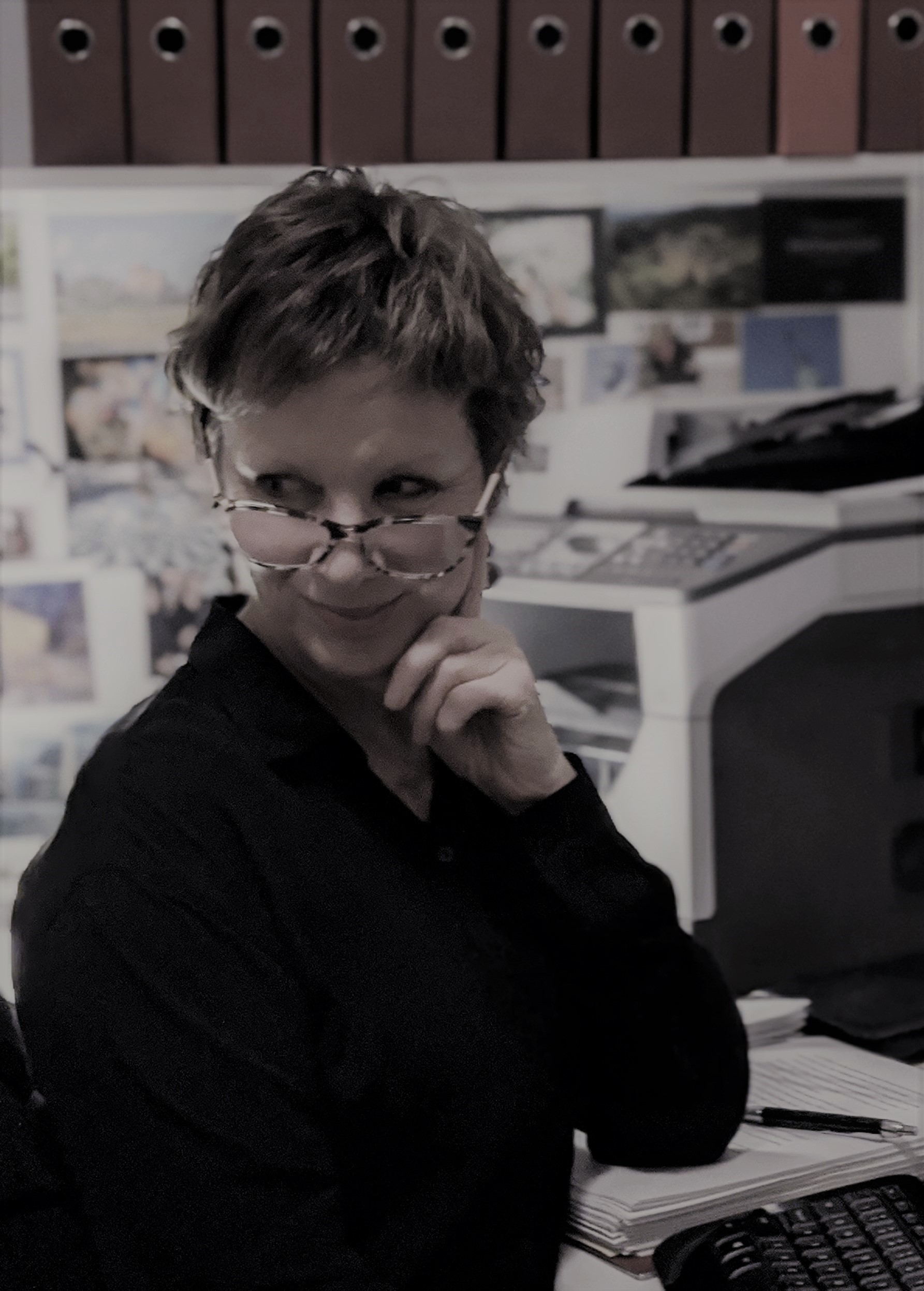 If your manuscript has been edited (perhaps many times!) and it’s ready for proofreading before submitting to an agent or publisher, you’re welcome to get in touch with the word count and I’ll email you with a quote for my fee.
Or … if you would like an assessment of your manuscript, I would be happy for you to contact me via my contact tab above
or email me: denise@denisemtaylor.com.au
I look forward to ‘hearing’ from you!
***
The following proofreading feedback is from a longstanding client:
I was delighted with your final proofing on my last draft. So good to get some clarity on the colon issue and the capitalisation. I knew there were still some problems but it was really doing my head in nailing what was the basic principle … with your extra input I finally got it!